

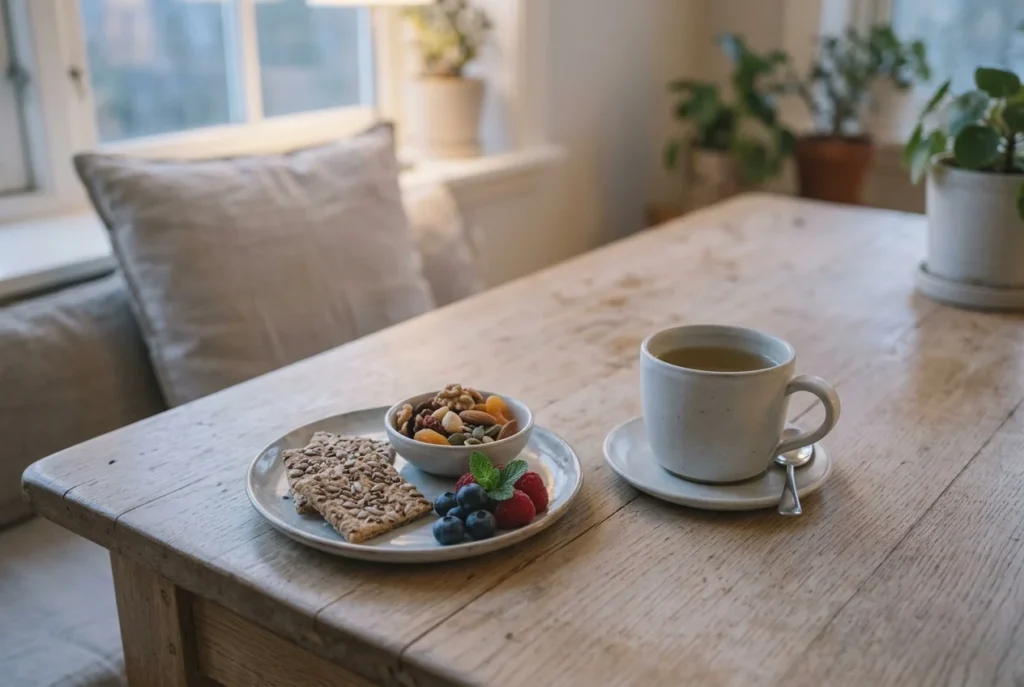
Your evening meal significantly affects how well you sleep that night. Many people wonder what they should eat before bed to fall asleep easier and sleep through the night better. The good news: There are foods that can actually support your sleep.
Quick Answer: What Should You Eat Before Bed?
Foods containing tryptophan, magnesium, and complex carbohydrates support sleep. Good choices include oatmeal with milk, whole grain bread with turkey, bananas with nuts, or a small bowl of cottage cheese. Avoid heavy, fatty meals and large amounts of sugar before bedtime.
How Food Affects Your Sleep
The connection between nutrition and sleep is more complex than most people think. Your digestive system and sleep regulation are closely linked through various mechanisms.
First, certain foods contain substances that directly affect sleep hormones. Tryptophan, an amino acid found in many protein sources, is converted in the body to serotonin and then to melatonin. This is the hormone that controls your sleep-wake cycle.
Second, blood sugar levels play an important role. Large fluctuations in blood sugar can disrupt sleep and cause nighttime awakenings. Foods with a low glycemic index help keep blood sugar stable.
Best Foods for Better Sleep
Foods rich in tryptophan support melatonin production. Turkey is particularly well-known for this, but chicken, eggs, and dairy products also contain this amino acid. Combine them with complex carbohydrates for optimal effect.
Oatmeal is ideal for the evening. It contains not only tryptophan but also plenty of melatonin and magnesium. A warm oatmeal with milk and a few berries makes a perfect light evening meal.
Bananas are rich in magnesium and potassium. These minerals help relax muscles and promote calmness. The natural sugar content provides gentle energy without causing blood sugar spikes.
Nuts, especially almonds and walnuts, contain melatonin and healthy fats. A small handful in the evening can support the natural sleep rhythm.
Cottage cheese provides casein protein. This protein is digested slowly and provides the body with amino acids throughout the night. This supports recovery and prevents nighttime hunger.
Foods to Avoid Before Bed
Caffeine is the most obvious sleep killer. Coffee, black tea, and energy drinks should be avoided at least six hours before bedtime. But be careful: chocolate and some medications also contain caffeine.
Alcohol might make you feel sleepy initially, but it significantly impairs sleep quality. It disrupts REM sleep and causes more frequent awakenings during the night.
Heavy, fatty meals burden the digestive system. The body needs to work hard to process them, which can lead to heartburn and restless sleep. Spicy foods have a similar effect.
Large amounts of sugar cause blood sugar spikes followed by crashes. This can lead to nighttime awakenings when blood sugar drops too low.
Ideal Timing for Evening Meals
The timing of your last meal is just as important as what you eat. Ideally, you should finish eating two to three hours before bedtime. This gives your body time to digest without interfering with sleep.
If you get hungry shortly before bed, a small snack is fine. Choose something light like a small banana, a few almonds, or a glass of warm milk. Avoid large portions that require extensive digestion.
Hydration and Sleep
Proper hydration is important for sleep quality, but timing matters. Drink enough throughout the day, but reduce fluid intake in the last two hours before bed. This minimizes nighttime bathroom trips that can disrupt sleep.
Some drinks can actually support sleep. Chamomile tea has mild sedative properties. Warm milk contains tryptophan and can have a calming effect.
Sample Evening Meals
Here are some balanced evening meal ideas that support sleep:
- Grilled chicken with quinoa and steamed vegetables
- Baked salmon with sweet potato and green beans
- Turkey breast sandwich on whole grain bread with lettuce
- Lentil soup with whole grain roll
- Small portion of pasta with turkey meatballs and tomato sauce
If you need a bedtime snack, try:
- Half a banana with a teaspoon of almond butter
- Small bowl of Greek yogurt with honey
- A few whole grain crackers with cottage cheese
- Handful of cherries, which naturally contain melatonin
Individual Differences
Remember that everyone reacts differently to foods. Some people sleep fine after a late snack, while others need several hours of digestion time. Pay attention to how your body responds and adjust accordingly.
Food intolerances can also affect sleep. If you suspect certain foods disrupt your rest, try an elimination diet to identify triggers. Common culprits include dairy, gluten, and high-histamine foods.
Conclusion
What you eat before bed matters for sleep quality. Choose foods that support your natural sleep mechanisms rather than working against them. Focus on light meals with protein, complex carbohydrates, and sleep-supporting nutrients.
Avoid heavy, fatty, spicy meals and stimulants like caffeine and alcohol. Time your last meal two to three hours before bed, and if needed, enjoy a small sleep-friendly snack. With the right evening nutrition, you can significantly improve your sleep quality and wake up feeling more refreshed.