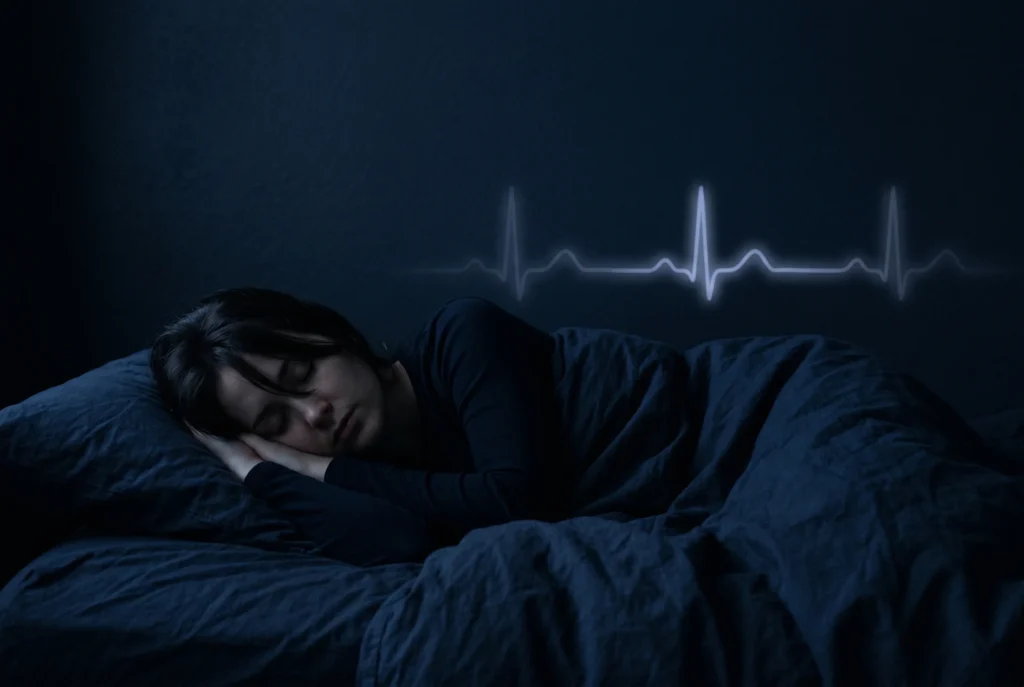


Sleep problems and depression are more closely linked than most people realize. It’s not that poor sleep is simply a symptom of depression. The relationship is bidirectional: sleep problems can cause depression, and depression can cause sleep problems. People with chronic poor sleep have up to a tenfold increased risk of a depressive episode. That’s not a small association. It’s one of the most robust findings in sleep research. And it’s often overlooked in treatment.
The bidirectional relationship
First things first: sleep and depression influence each other. A systematic review by Alvaro and colleagues (2013) found that insomnia and depressive symptoms are bidirectionally linked. This means: people who sleep poorly are more likely to become depressed. And people who are depressed sleep worse. The vicious cycle is obvious. The study by Baglioni and colleagues (2011) showed that people with insomnia have a 2.83-fold increased risk of developing depression compared to good sleepers. Even more impressive: a longitudinal study by Breslau and colleagues (1998) found that insomnia in young men was a significant risk factor for subsequent depression, and this effect persisted for at least 30 years. The message: sleep problems are not just a secondary symptom. They are an independent risk factor.
What happens in the brain
When you don’t sleep, the activity in your brain changes. The amygdala, the emotional center, becomes overactive. The prefrontal cortex, responsible for emotional regulation, becomes underactive. An fMRI study by Yoo and colleagues (2007) found that after just one night of sleep deprivation, amygdala activity in response to emotional stimuli increased by 60 percent, while the connection to the prefrontal cortex weakened by 30 percent. This means: after a sleepless night, your brain reacts more strongly to negative stimuli and can regulate them less effectively. This isn’t a character flaw. It’s neurobiology. Chronic sleep deprivation maintains this state and promotes the development of depressive symptoms.
The cortisol vicious cycle
Cortisol is the stress hormone, and it plays a key role in the sleep-depression axis. Normally, cortisol levels drop in the evening and reach their lowest point around midnight. In people with sleep problems, cortisol levels remain elevated. High cortisol levels in the evening prevent falling asleep, and poor sleep in turn raises cortisol levels the next day. A study by Vgontzas and colleagues (2001) found that people with chronic insomnia had significantly higher cortisol levels than good sleepers, not just at night but across the entire 24-hour cycle. The body is in chronic stress, and chronic stress is one of the strongest predictors of depression.
Why treatment often addresses only one side
Here lies the problem in clinical care: when a patient presents with depression and sleep problems, usually only the depression is treated. Antidepressants are prescribed, perhaps psychotherapy recommended. The sleep problem is considered a secondary symptom that will improve when the depression improves. The data tell a different story. A study by Manber and colleagues (2008) found that simultaneous treatment of insomnia and depression with CBT-I and antidepressants led to significantly better outcomes than treating depression alone. Depression improved faster and more sustainably when sleep was also treated. Ignoring sleep means treating only half the depression.
What you can do: Breaking the vicious cycle
The bidirectional relationship also means: if you improve your sleep, you also improve your mood. The simplest and best-studied method is CBT-I, cognitive behavioral therapy for insomnia. It has been shown to be effective for sleep problems with and without comorbid depression. Beyond that: keep a consistent bedtime, even on weekends. Seek bright light in the morning to stabilize your circadian rhythm. Don’t ruminate in bed; get up and only return when sleepiness arrives. Physical activity during the day, but not within 3 hours of bedtime. And above all: if you notice signs of depression, persistent sadness, lack of motivation, hopelessness, seek professional help. Sleep problems and depression reinforce each other, but treatment can turn the same cycle in a positive direction.
If you know someone who is affected
Depression and sleep problems are not weaknesses or a matter of willpower. They are medical conditions that can be treated. If you know someone who is affected, take it seriously. Encourage them to seek professional help. Crisis hotlines are available and confidential.
Conclusion: Sleep is not a luxury, it’s a protective factor
The link between sleep and depression is bidirectional, robust, and clinically relevant. Sleep problems increase the risk of depression two to tenfold. Depression worsens sleep. The vicious cycle can be broken, but only if both sides are treated. CBT-I is the most effective method for the sleep side, psychotherapy and medication if needed for the depression side. Improving your sleep also improves your mental health. That’s not a claim, it’s evidence.
Beste Grüße, Monika
Haupt-Keyword: sleep and depression
Sekundäre Keywords: insomnia depression, sleep deprivation depression, bidirectional sleep depression, CBT-I depression, sleep depression link