
How a Sleep Mask Improves Your Sleep
You’re lying in bed and just can’t fall asleep. Street noise seeps through the closed windows. Your partner is still reading with the bedside lamp on. Tomorrow is an important day and you need sleep. The solution could be as simple as a sleep mask.
Yes, It Significantly Improves Sleep
A sleep eye mask blocks light and promotes melatonin production. You fall asleep faster and sleep through the night better. Sleep quality rises measurably. Many users report deeper, more restorative sleep.
How a Sleep Mask Improves Your Sleep
A sleep mask works through simple biology. Your brain produces melatonin when it gets dark. This hormone makes you feel tired. As soon as light hits your eyes, production stops. This is a survival mechanism from evolution. In the past, daylight woke humans up. Today, artificial light disrupts our natural rhythm.
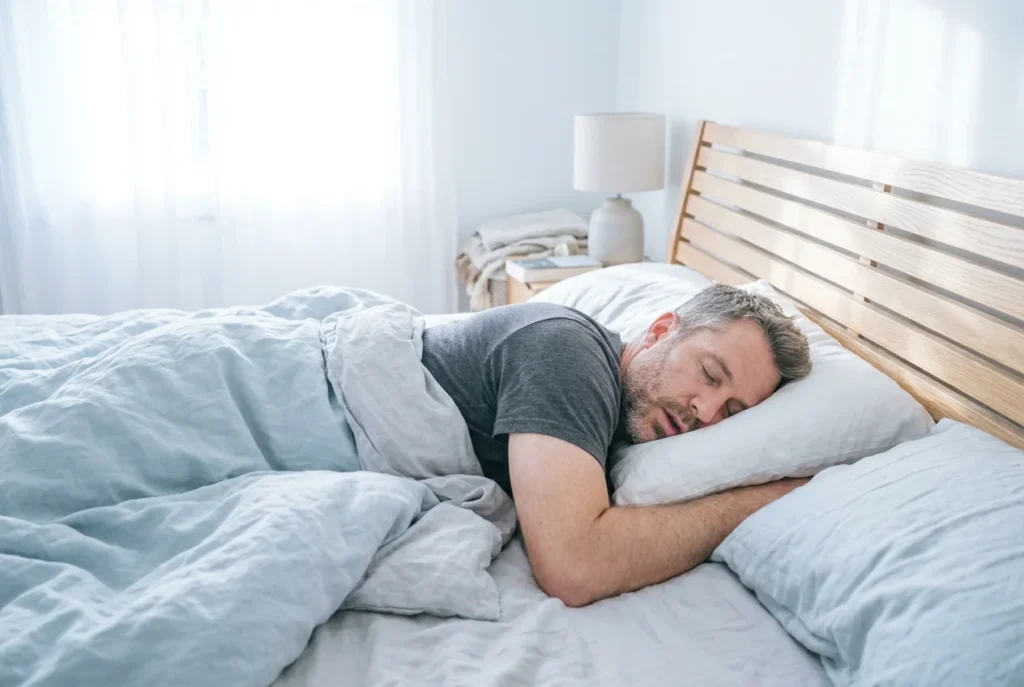
A sleep mask simulates absolute darkness. It tricks your body into thinking it’s the middle of the night. Melatonin production continues uninterrupted. You fall asleep faster and sleep through the night more soundly. Many people report deeper sleep since wearing a mask. The difference is often noticeable after just one night.
Light sensitivity is a common problem. Even small light sources disrupt your sleep rhythm. Streetlights, moonlight, or device LEDs are enough. Your brain registers this light through your eyelids. A sleep mask completely interrupts this process. Many people don’t even realize they’re light-sensitive. They just notice they struggle to fall asleep or wake up exhausted.
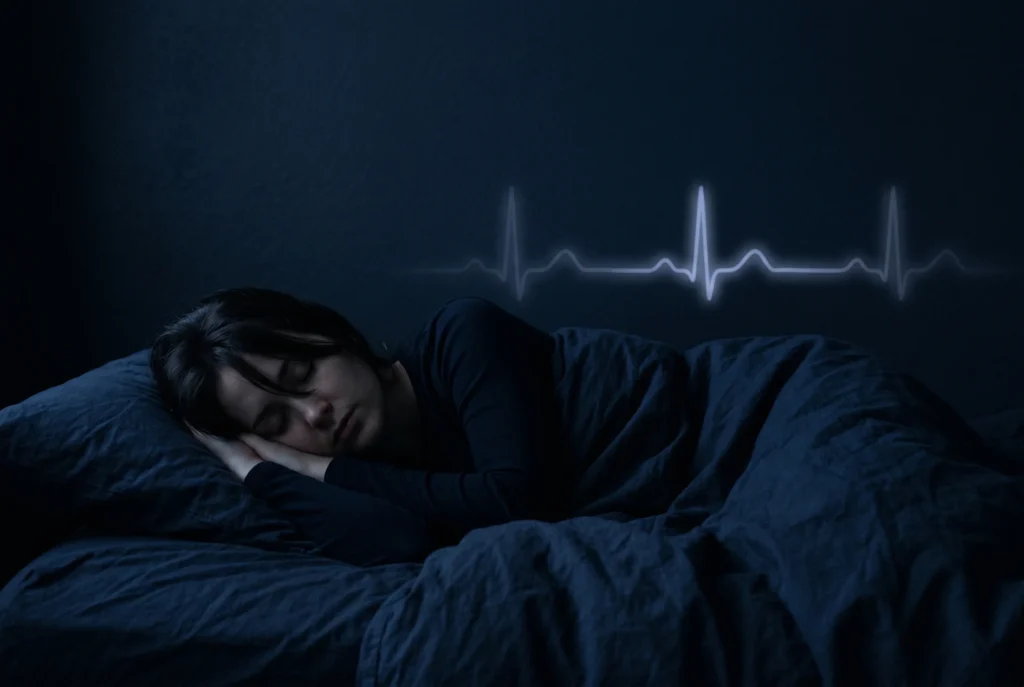
The benefits go beyond falling asleep. People who sleep continuously recover better. Their bodies can regenerate. The immune system works more effectively. Mental performance improves. The next day, you feel rested. The risk of cardiovascular disease decreases. Even long-term memory benefits from restorative sleep.
Studies confirm these positive effects. Participants with sleep masks fell asleep faster on average. They woke up less frequently. Sleep quality improved measurably. Even people without sleep problems benefited. The mask optimized their already good sleep further. Researchers recommend sleep masks as a simple sleep aid.
People with irregular shifts benefit especially. They need to sleep during daylight hours. A sleep mask makes this possible. It creates artificial night. The body can regenerate despite daylight. This is important for health. Shift workers have a particularly high risk of sleep disorders. For them, a sleep mask is often the only way to get enough daytime sleep.
What to Look for When Buying a Sleep Mask
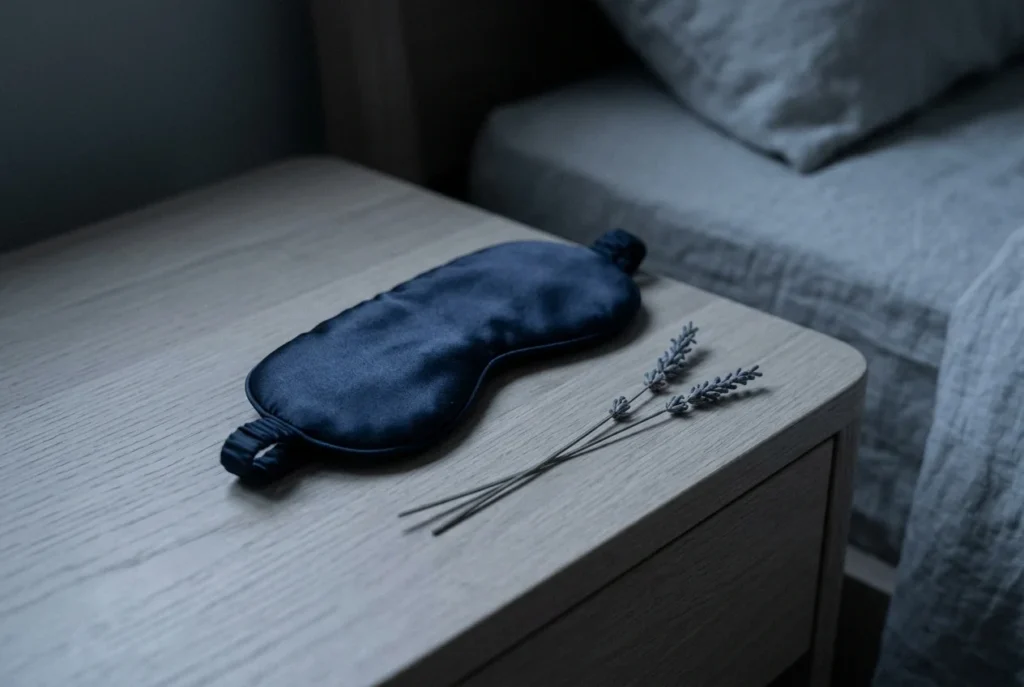
Not every sleep mask is equally good. The fit determines comfort. It should completely block out light. At the same time, it shouldn’t be too tight. Pressure on the eyes is uncomfortable. Most people prefer soft materials. Silk or high-quality synthetics work especially well.
The material should be breathable. Otherwise, you’ll sweat under the mask. This is especially unpleasant in summer. An adjustable strap helps with the right fit. Every head has a different shape. The mask should adapt individually. A too-loose fit lets light in.
Some models provide additional cooling. This feels good on the eyelids. Others have eye cavities that prevent any pressure. Try different variants. What works perfectly for your neighbor may not suit you. The best sleep mask is the one you’ll actually wear.
Prices vary between ten and fifty dollars. The most expensive mask isn’t automatically the best. Look for high-quality materials. Read reviews from other buyers. People with similar problems to yours give valuable hints. Good value is often found in the mid-range segment.
Good sleep masks share common characteristics. They’re lightweight and soft. The material is skin-friendly. It doesn’t irritate or cause allergies. Seams are flat and not noticeable. A good closure keeps the mask in place all night. Quality shows in workmanship and material choice.
Tips for Getting Started with a Sleep Mask
Adjustment takes time. Your body needs to get used to the new feeling. Start by wearing the mask only when falling asleep. If you wake up at night, remove it. After a week, you can wear it through the night. Most people adjust faster than expected.
Clean the mask regularly. Sweat and skin oils accumulate. This is unhygienic and can cause skin irritation. Follow the manufacturer’s care instructions. Higher quality usually means easier cleaning. A clean mask is important for eye health.
Combine the mask with other sleep hygiene measures. A cool, dark room supports the effect additionally. Avoid screens before bedtime. Blue light disrupts melatonin production. The mask can’t fight against too strong light sources. A holistic approach brings the best results.
For especially sensitive people, there are special variants. Some models have additional ear covers. These block noise too. Perfect for city apartments or loud neighbors. Other masks cool actively. This is pleasant for headaches or migraines. Combined solutions address multiple problems at once.
Travel enthusiasts appreciate compact models. They fit in any carry-on. In unfamiliar hotels, light conditions are unknown. Your own sleep mask creates familiarity. You sleep better even when traveling. This is important for business travelers and vacationers. A familiar sleep environment improves sleep quality everywhere.
Conclusion
A sleep mask is a simple and affordable solution for sleep problems. It costs little and works immediately. No side effects. No habituation effects. You don’t have to take anything or make changes. Just put on the mask before bed. Success depends on consistent use.
If you suffer from light sensitivity, it’s worth trying. Many people swear by their sleep mask. It has become indispensable in their nighttime routine. Perhaps it will help you get the restful nights you deserve. The investment in a good sleep mask pays off. It lasts several years. The cost per night is minimal. The benefit for your health is enormous. Try it and experience the difference yourself. Your body will thank you.