
Melatonin — The Gateway to Sleep
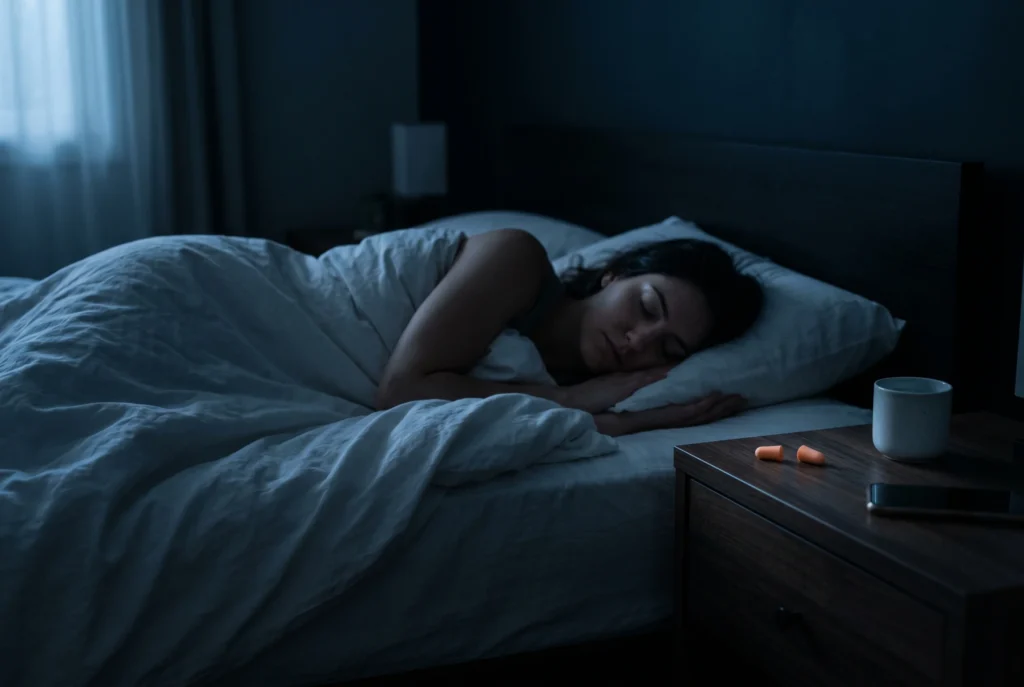
Melatonin is the hormone that signals to your body: it’s time to sleep. It’s produced in the pineal gland when darkness falls. Release begins in the early evening, peaks around midnight, and declines by morning.
Light is the strongest regulator of melatonin production. Blue light from screens demonstrably suppresses release — even dim light can reduce melatonin levels by 50 percent. If you check your phone in the evening, you’re sabotaging your own sleep hormone. LED lighting in the living room with a high blue light component can also slow production. Warm white lamps below 2700 Kelvin are a better choice for the evening.
Production declines with age. After 40, melatonin levels drop noticeably; by 60, they’re often only a fraction of youthful levels. This explains why older people more frequently have trouble falling asleep and experience less deep sleep.
The key takeaway: Avoid screens one hour before bed and dim the lights. This gives your pineal gland the chance to produce melatonin.
Cortisol — The Alarm That Won’t Turn Off
Cortisol is your natural wake-up hormone. Levels rise in the early morning hours and peak shortly after waking. This is the cortisol awakening response — a healthy signal that gets you ready for the day.
The problem: Chronic stress keeps cortisol levels constantly elevated. Instead of the natural morning rise, cortisol stays high in the evening too. Your body remains in a state of alert. Falling asleep becomes a struggle because the brain gives the command: stay awake, danger ahead.
Studies show that people with insomnia have an altered cortisol rhythm. Evening cortisol levels are higher than in good sleepers, and the morning rise is flatter. The rhythm is disrupted — and with it, the sleep.
Stress management is the most effective lever against a disrupted cortisol profile. Breathing exercises, meditation, and a consistent evening routine measurably lower evening cortisol. When you repair your cortisol rhythm, you repair your sleep.
The key takeaway: Actively end your day. An evening ritual signals to your body that the danger has passed — and lets cortisol drop.
Growth Hormone — The Nighttime Regenerator
Growth hormone is released almost exclusively during deep sleep. It repairs tissue, builds muscle, strengthens the immune system, and regulates metabolism. Without sufficient deep sleep, this hormone lacks the time to do its work.
Release follows a clear pattern: In the first half of the night, when deep sleep is at its peak, up to 70 percent of daily growth hormone is released. Going to bed late, drinking alcohol, or being disrupted by stress means losing exactly this phase.
With age, growth hormone production declines — and with it, recovery capacity. This is one reason older people recover more slowly from bad nights than younger ones. The body has less of the hormone that handles repair.
The key takeaway: Maximize deep sleep through cool temperatures, consistent sleep times, and no alcohol in the evening. This gives growth hormone the time it needs.
Estrogen and Progesterone — The Female Sleep Regulators
Estrogen and progesterone influence sleep in multiple ways. Estrogen shortens sleep onset, increases REM share, and supports serotonin production. Progesterone has a calming effect because it increases GABA activity in the brain. When both hormones are balanced, sleep comes naturally.
During menopause, levels of both hormones fluctuate dramatically. Declining estrogen leads to hot flashes and night sweats that fragment sleep. The progesterone drop reduces natural calming. The result: poor sleep, frequent awakening, and morning exhaustion.
But even in the premenstrual phase and during pregnancy, hormonal changes can disturb sleep. This isn’t a sign of weakness — it’s a physiological reality that can be managed with the right strategies.
Men are also affected: Age-related testosterone decline can worsen sleep too. Testosterone influences deep sleep share, and low levels correlate with frequent nighttime awakening. The mechanism is less well-researched than for female hormones, but the clinical observation is clear.
The key takeaway: Women in menopause benefit especially from sleep hygiene, a cool bedroom, and herbal support like ashwagandha or lemon balm tea. For persistent problems, consulting a gynecologist is recommended.
Conclusion
Your hormones and your sleep are a team — they only work together. Melatonin initiates sleep, cortisol wakes you, growth hormone regenerates the body, and sex hormones keep the system balanced. When you improve your sleep, you regulate your hormones. When you regulate your hormones, you improve your sleep. Start with what you can control tonight: reduce light, lower stress, sleep cool. Your hormonal system will thank you.