
The Three Pillars of a Sleep-Friendly Bedroom
A bedroom that truly invites rest builds on three foundations. These pillars influence your sleep quality more than you think. And the best part: They can usually be implemented without much effort.
The first pillar is temperature. Your body needs a lower core temperature to fall asleep. A too-warm bedroom prevents this. Ideally, keep it between 60-65°F (16-18°C). That might sound cool, but it’s exactly what your body wants for sleeping. Lightweight bedding and good ventilation help maintain this temperature.
Why is temperature so important? Your body actively lowers its core temperature when falling asleep. This process signals to the brain that it’s time to rest. A too-warm room hinders this natural reduction. You toss and turn because your body has to work instead of relaxing. The right room temperature supports this biological process.
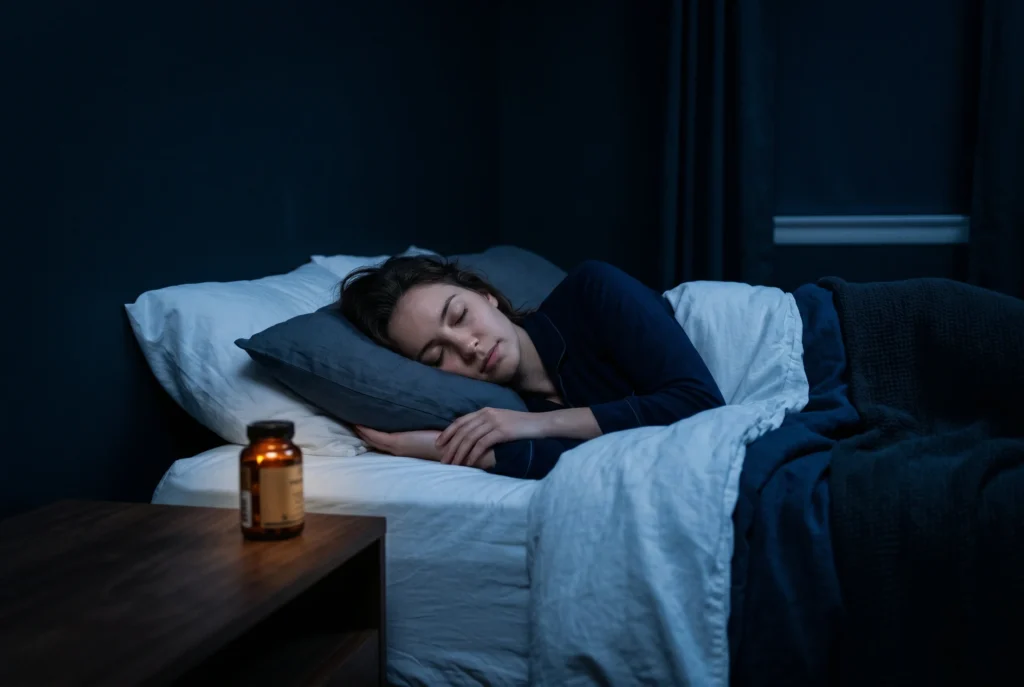
The second pillar is darkness. Even the smallest light sources disrupt melatonin production. Blackout curtains or a sleep mask help. Also cover LED indicators from devices. Your brain registers light even when you don’t consciously perceive it.
Our eyes have special receptors for light. They report even minimal brightness to the brain. This suppresses the sleep hormone melatonin. Light penetrates even through closed eyelids. That’s why sleep masks work so well. They simulate absolute darkness. Your brain can maintain its natural rhythm.
The third pillar is quiet. Noise interrupts sleep even when you don’t wake up. Double windows, carpets, or earplugs can help. Some people also benefit from white noise that masks other sounds. Find out what works for you.
Noises generate stress hormones even during sleep. Your body remains in heightened alertness. This prevents restorative deep sleep. Constant noise changes are especially harmful. Consistent white noise is often better than interrupted silence. Experiment with different solutions for your situation.
What Your Bedroom Does NOT Need
Many bedrooms are stuffed with things that disturb rather than promote sleep. A clear look at what can go often helps more than new purchases.
The biggest disruptor is often the TV. Blue light suppresses melatonin. Even when just running in the background, your brain perceives it as daylight. The bedroom should be a screen-free space. Instead, read a book or listen to music before bed.
Many people get used to falling asleep with the TV. This is problematic for two reasons. First, the blue light that disrupts the sleep rhythm. Second, the content that activates your brain. Even harmless shows keep your mind awake. Your body needs time to wind down. Give it that peace before sleep.
Your phone doesn’t belong in the bedroom either. The temptation to scroll is too great. The blue light emission is harmful to your sleep rhythm. Charge it outside the bedroom overnight. Buy an analog alarm clock if you use your phone as an alarm.
Smartphones are additionally problematic through their notifications. Every sound creates anticipation. Your brain learns to pay attention to these signals. Even during sleep, you remain more easily arousable because of this. Keeping the phone outside the room creates physical distance. You actively decide when to use it.
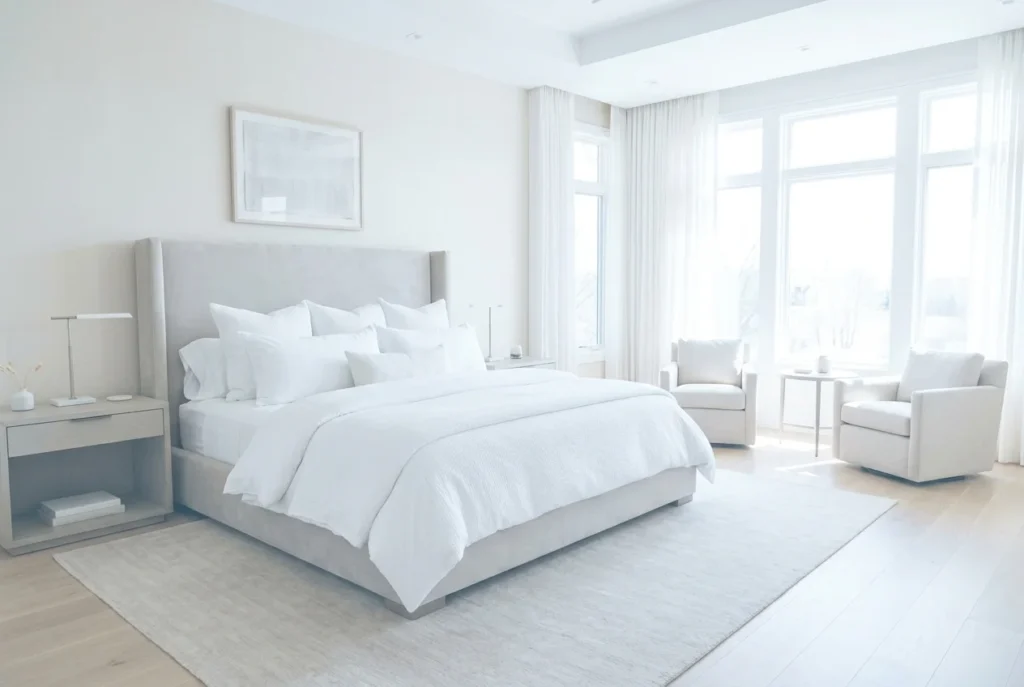
Clutter negatively affects sleep. A chaotic environment signals stress. Your brain can’t relax when surrounded by things that still need to be done. Keep the bedroom minimal and tidy. What you don’t need goes out or in the closet.
Research shows that visual clutter raises stress hormones. Your subconscious constantly registers open tasks. This can impair sleep. A minimalist bedroom helps your psyche. Few, consciously chosen objects promote calm.
Practical Tips for Implementation
The best theory is useless if you don’t implement it. Here are concrete steps you can start with right away. Many require little time or money.
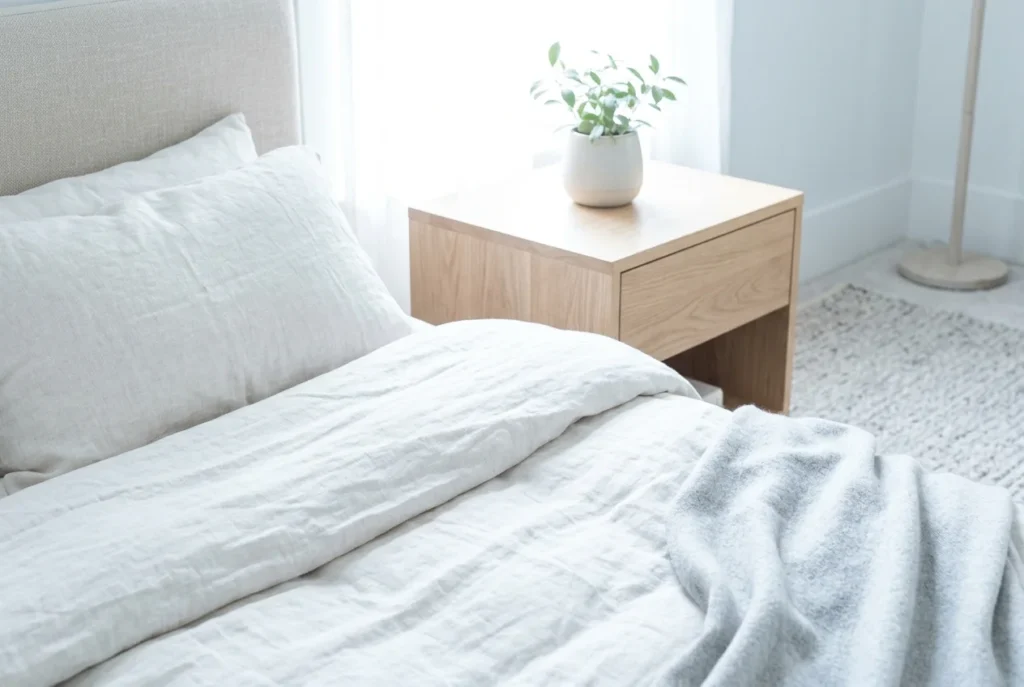
Start with temperature. Ventilate thoroughly before bed. This quickly lowers room temperature. Use breathable bedding made of cotton or linen. These materials wick away moisture and cool. Skip too many blankets. One good winter blanket is better than three thin ones.
The choice of mattress influences temperature and comfort. Too-soft mattresses store heat. Too-hard ones can cause pressure points. Test different firmness levels. Your body gives you feedback. Good sleep is the best criterion for the right choice.
Darkness can often be created simply. Blackout blinds or curtains block street light. Cover LED indicators or position your bed away from blinking devices. A sleep mask is an affordable alternative if you can’t completely darken the room.
Also watch for small light sources. Digital clocks, routers, chargers. Every blinking light disturbs. Remove these devices or cover them. Black tape often helps. Your bedroom should be completely dark when all lights are off.
For quiet, there are various approaches. Carpets and curtains dampen sound. Double windows insulate against outside noise. Earplugs help with unavoidable noise. Some people swear by white noise or nature sounds. Apps can play these sounds if you use your phone for other purposes.
White noise masks noise peaks evenly. This helps especially with irregular noise. Traffic, barking dogs, loud neighbors. The brain gets used to the consistent noise. It filters it out as unimportant. You sleep through even though environmental noises continue.
Conclusion
Your bedroom is more than just a room with a bed. It’s where your body recovers and regenerates. With the right setup, you actively support this process. The investment in sleep quality pays off in all areas of life.
Start today with one change. Perhaps you first ventilate thoroughly before bed. Or you store away the TV. Small steps often lead to big improvements. Your body will thank you.